
Argenx has agreed to acquire Unnatural Products, adding a macrocyclic peptide discovery team to its antibody engineering capabilities. The November 9 agreement provides for $550 million upfront and up to $595 million in development and regulatory milestones. Closing is expected by the end of 2026, subject to customary conditions. The scientific aim is to give argenx more ways to pursue immune disease targets, including potential oral and long acting medicines.[1]
Buy 1, Get 1 20% Off
Pick any two research compounds. Take 20% off the lower priced one.
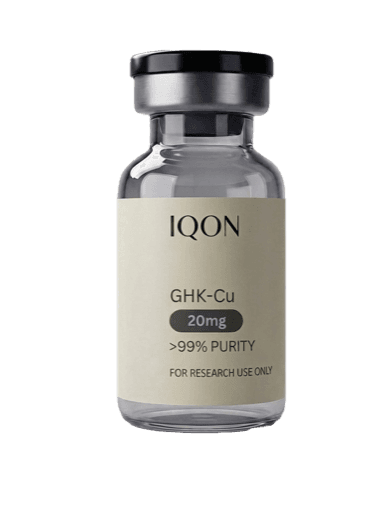
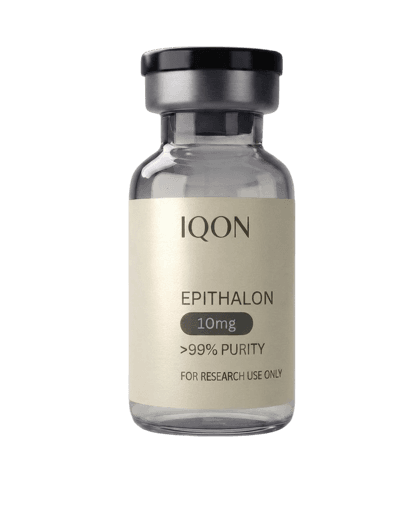
Applied automatically at checkout, no code needed
Claim my 20% off →In every pair, the lower priced item is 20% off after other discounts; accessories excluded. For research use only.
The proposed acquisition concerns drug discovery. IQON Labs offers a separate research use only catalog and has no stated role in the transaction or the programs discussed here.
A discovery operation, with its team staying in Santa Cruz
The agreement would bring the remaining shares of Unnatural Products, or UNP, under argenx ownership. Argenx already holds a minority stake. Both boards have approved the transaction, and the upfront payment would come from cash on hand. The headline value of about $1.15 billion includes payments that depend on future milestones.[1]
UNP would continue operating from Santa Cruz, California, with its existing leadership and team. Argenx plans to make that site its home for peptide discovery, while contributing the clinical development and commercialization capabilities needed to advance resulting medicines.[1]
That division of work explains the attraction of the deal. UNP supplies a way to discover a different kind of molecule; argenx supplies experience moving immunology programs through development. The acquisition proposal connects those capabilities within a single organization.[1]
How ownership would change the existing collaboration
The companies publicly announced a research collaboration on July 1, 2025. Argenx identified several targets of interest, while UNP was responsible for discovery and development up to studies preparing a candidate for human testing. Argenx held exclusive options to develop and commercialize products against those targets.[2]
That earlier arrangement included research funding, an equity investment, potential milestones and royalties. Buying UNP would bring the discovery company itself inside argenx, extending the relationship beyond options on selected programs. The two announcements describe different transactions, so their headline potential values should not be added together as money already paid.[1][2]
For argenx, this builds on an established antibody business. Its best known medicine, Vyvgart, is an antibody fragment directed at the neonatal Fc receptor, or FcRn. The UNP agreement adds peptide capabilities alongside that expertise.[4]
Why a peptide platform complements antibodies
Macrocyclic peptides contain a molecular ring. Their appeal is partly geometric: macrocycles can engage difficult protein surfaces, including sites involved in interactions between proteins. Some can also cross cell membranes, opening possibilities for targets inside cells that conventional biologics struggle to reach.[3]
Those properties help explain why an antibody specialist would want another discovery approach. The relevant question for each target is which kind of molecule can reach it and engage it effectively. A peptide program gives researchers another option when the target or desired route of delivery calls for different properties.[1][3]
UNP describes a platform combining machine learning with parallel experimentation. In the collaboration announcement, that platform was intended to produce selective macrocycles against targets chosen by argenx. The acquisition announcement does not identify a new clinical candidate or present patient results from those programs.[1][2]
The investment concerns a repeatable discovery capability as well as the people who run it.[1][2] Readers interested in the earlier discovery step can explore how cyclic peptide libraries help researchers find binders; this transaction concerns what happens when a pharmaceutical company brings that expertise into its own organization.
Oral delivery still has to be earned by each molecule
A molecular ring alone does not make a peptide an oral medicine. A swallowed peptide must remain intact through the digestive tract and cross the intestinal lining. Poor solubility can limit how much is available for absorption, while digestive enzymes can break the molecule down before it reaches the bloodstream.[5]
These barriers explain why strong binding is only one part of discovery. Researchers also need a molecule that reaches its target at a useful exposure. Protecting a peptide from digestion and improving its absorption are separate challenges, even when its target binding is promising.[3][5]
Argenx names both oral and long acting medicines as possibilities. These describe different goals: how a medicine enters the body and how long its effects or exposure can be maintained. The announcement does not establish that a resulting candidate will achieve both, and it gives no candidate-specific clinical timetable.[1]
What would turn the agreement into scientific progress
The first observable milestone is completion of the transaction. After that, named candidates and evidence showing their activity, exposure and tolerability would make the scientific opportunity more concrete. A future regulatory milestone payment would reflect a later development step; it is not a result delivered by signing the agreement.[1][3]
The constructive change is already specific: argenx has a plan to pair an established immunology development organization with a dedicated peptide discovery operation in Santa Cruz. If the acquisition closes, that team would have a direct route into argenx development programs while retaining responsibility for its discovery work.[1]
Sources and further reading
- argenx definitive acquisition agreement, November 9, 2026
- UNP collaboration announcement, July 1, 2025
- Scientific Data: A membrane permeability database for nonpeptidic macrocycles
- Fierce Biotech: Argenx agreement and antibody strategy, November 9, 2026
- Baral and Choi: Oral peptide delivery barriers, Pharmaceutics, 2025
Related reading
Buy 1, Get 1 20% Off
Pick any two research compounds. Take 20% off the lower priced one.
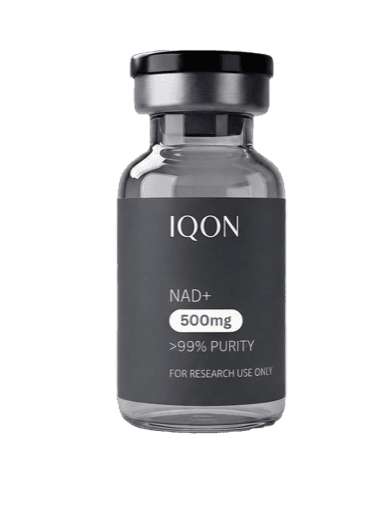
Applied automatically at checkout, no code needed
Claim my 20% off →In every pair, the lower priced item is 20% off after other discounts; accessories excluded. For research use only.