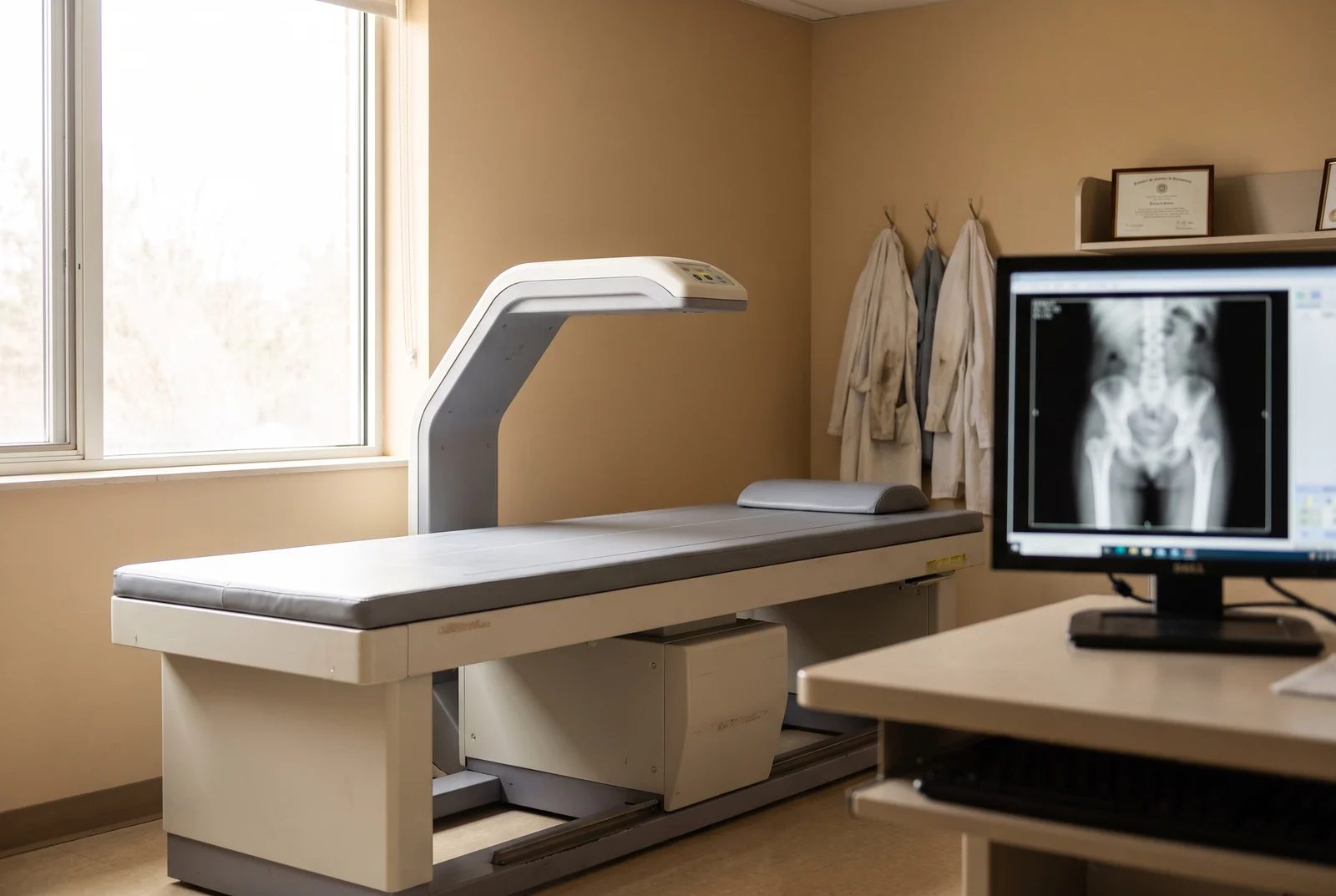
Entera Bio is preparing a phase 3 trial of EB613, its investigational oral osteoporosis peptide, with hip bone density as the main measure of effectiveness. An October 8 announcement scheduled a study-design poster for October 11 at the American Society for Bone and Mineral Research meeting. The announcement concerns how the candidate would be tested, rather than results from a completed phase 3 trial.[1][3]
Buy 1, Get 1 20% Off
Pick any two research compounds. Take 20% off the lower priced one.


Applied automatically at checkout, no code needed
Claim my 20% off →In every pair, the lower priced item is 20% off after other discounts; accessories excluded. For research use only.
IQON Labs' research use only catalog is separate from the clinical medicine and studies discussed here.
An oral version of a bone-building signal
EB613 contains teriparatide, the active fragment of parathyroid hormone, usually shortened to PTH. Its purpose is to stimulate bone formation. Entera is trying to deliver that peptide through the digestive tract, where enzymes and limited absorption make an oral formulation difficult to develop.[4]
The phase 2 formulation combined the peptide with ingredients intended to protect it from digestive enzymes and help it pass into the blood. Getting the peptide into the blood is only the first hurdle. The resulting exposure must produce a useful bone response with tolerable side effects.[4]
An oral formulation might appeal to people reluctant to use an injectable bone-building medicine, a barrier discussed by the study authors. That is the rationale for development, not evidence that EB613 improves treatment uptake. EB613 remains an investigational candidate.[1][4]
Why the hip scan matters
Bone mineral density, or BMD, measures the amount of mineral in bone. A technique called dual-energy X-ray absorptiometry, abbreviated DXA, provides the measurement used in osteoporosis studies. The reason to increase bone strength is to prevent fractures, but waiting for enough fractures to compare treatments requires large, lengthy trials.[2]
In December 2025, the FDA qualified a specific alternative: percentage change from baseline in total hip BMD at 24 months, measured by DXA, as a validated surrogate endpoint for phase 3 studies in postmenopausal women with osteoporosis at risk for fracture.[2]
A surrogate is a measured substitute for a clinical outcome. Here, density change can support evaluation without making fractures the main endpoint. The qualification gives researchers a defined tool; it does not approve an individual drug or turn any short-term density gain into a measured reduction in broken bones.[2]
Entera's 12-month proposal
Entera's own proposed trial uses a different timepoint. In June, the company said FDA feedback supported a randomized, double-blind, placebo-controlled study of approximately 750 postmenopausal women, with total hip BMD change at month 12 as the primary endpoint.[3]
That statement describes feedback on a particular development program. The FDA's public qualification describes the general 24-month tool. They have different scopes, so the two timepoints alone do not establish a regulatory disagreement. The 12-month plan remains the company's account of its FDA discussions.[2][3]
The proposal also includes an open-label extension through 24 months to collect further safety, durability and treatment-sequence information. Open-label means participants and researchers know the treatment; it should not be mistaken for another year of the same blinded placebo comparison. The distinction matters when eventual results from the first year and extension are read together.[3]
What the earlier trial measured
The evidence behind the plan comes from a phase 2 study conducted in 2019 to 2021 and published in the Journal of Bone and Mineral Research in 2024. It randomized 161 postmenopausal women with low bone density or osteoporosis to oral PTH or placebo at four sites in Israel, with six months of planned treatment.[4][5]
Its primary endpoint was the change at three months in PINP, a blood marker of bone formation. PINP is released during the formation of type I collagen, a structural protein in bone. Bone density at the spine and hip was a secondary endpoint assessed at six months.[4][5]
That sequence separates two questions. The blood test asks whether bone formation activity responds to the peptide. The scan asks whether bone mineral density changes over time. Neither measurement counts fractures, which this small trial was not designed to establish as a treatment benefit.[2][4]
A small trial that changed as it ran
The study did not proceed with an unchanged set of treatment groups. An interim analysis found little response in the lower groups, and the investigators amended the protocol to add a higher treatment group. They later adjusted the protocol again after some participants developed symptoms on standing.[4]
The paper reports greater spine and hip BMD gains with the highest treatment group than with placebo at six months. Those results came from a smaller analysis group than the 161 women originally randomized. The six-month analyses used participants who completed treatment under the protocol without major deviations, and 134 women completed the month-six visit overall.[4]
Completion matters because people who stop treatment can differ from those who remain in a study. The six-month analysis therefore gives a narrower view than the original randomized population. The paper also reports that statistical tests for secondary endpoints were not adjusted for multiple comparisons, making them less conclusive than a single prespecified primary test.[4]
For another example of how a trial's main question can differ from its additional findings, see our reporting on semaglutide's REMODEL kidney study. The measurements differ, but the distinction between primary and secondary evidence remains useful.
Tolerability is part of the larger test
Nausea, dizziness, headache and palpitations occurred in the EB613 study. Investigators reported more tolerability problems in the highest group that began at its full assigned level, prompting the protocol change. Nineteen participants across the trial stopped study medication because of adverse events; stopping medication was not always the same as withdrawing from follow-up.[4]
Safety assessments included clinic visits during the six-month treatment period and telephone contacts, including a call two weeks after the final clinic visit. The safety population comprised randomized participants who received study medication and had at least one observation afterward. People with prior fractures and several significant medical conditions were excluded.[4]
Those features matter for the planned larger study. It needs to show how often adverse effects interrupt treatment and what happens with longer observation. Entera sponsored the phase 2 trial, and company-affiliated researchers were among the paper's authors. The company is both the developer of EB613 and the source of the current trial-plan announcement.[4][5]
The evidence to watch next
The next useful milestone is a publicly documented phase 3 protocol and enrollment, followed by the prespecified comparison of hip BMD and a full account of withdrawals and adverse events. The extension should then show how the response and safety findings develop with longer follow-up.[3]
For EB613, the change would be a move from a small, amended study centered on a blood marker to a larger trial designed around hip density. Whether that plan produces persuasive evidence will depend on the randomized results, the people represented in them, and the safety record collected alongside the scans.[3][4]
Frequently asked questions
Sources and further reading
Related reading
Buy 1, Get 1 20% Off
Pick any two research compounds. Take 20% off the lower priced one.

Applied automatically at checkout, no code needed
Claim my 20% off →In every pair, the lower priced item is 20% off after other discounts; accessories excluded. For research use only.