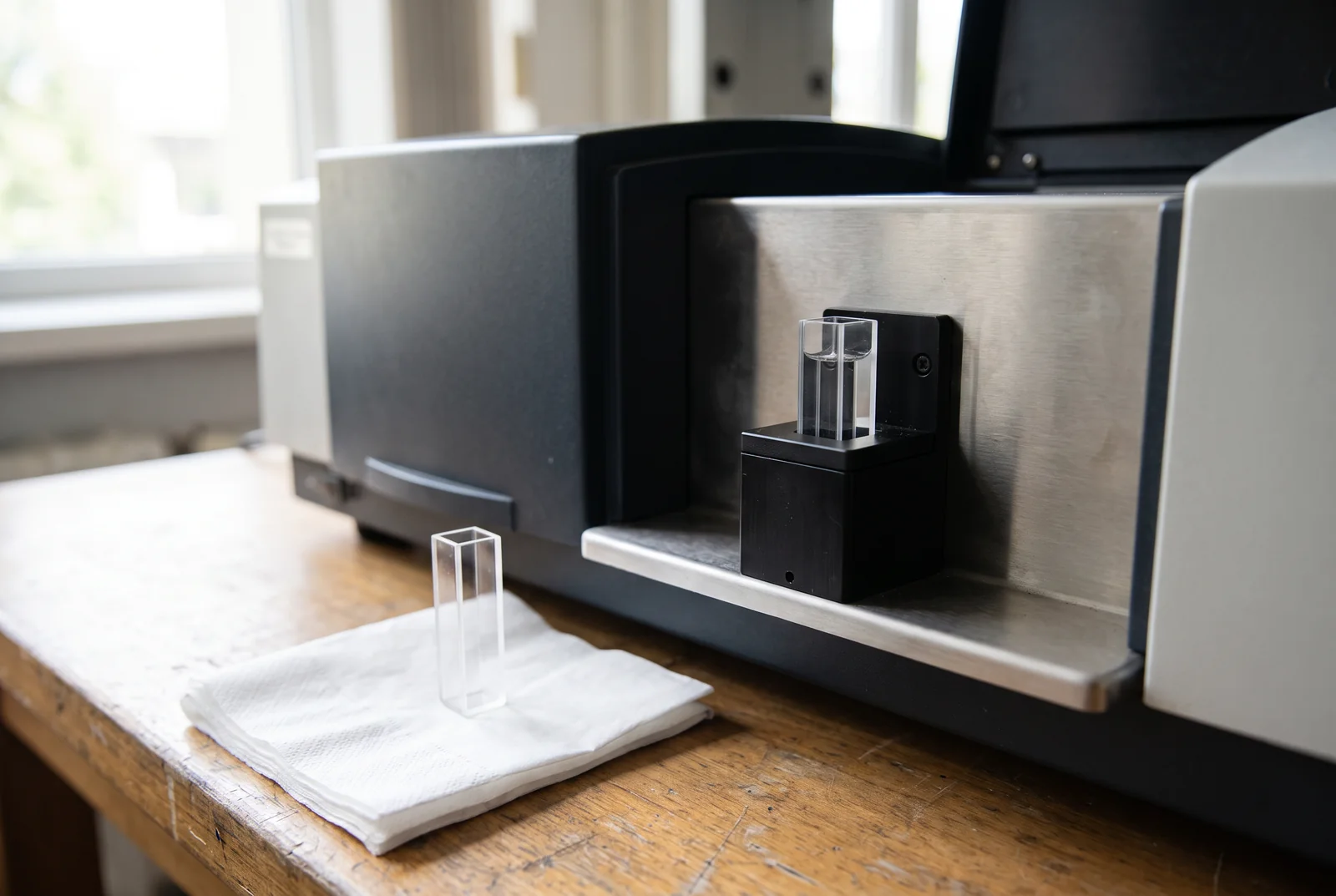
SS31, also called elamipretide, is a synthetic peptide of four amino acids that interacts with mitochondrial membranes and their proteins.[3][4] Cardiolipin, a membrane fat involved in energy production, is central to that research.[1] Experiments point to effects beyond neutralizing reactive molecules, with membrane charge and nearby proteins also part of the explanation.[3][4]
Buy 1, Get 1 20% Off
Pick any two research compounds. Take 20% off the lower priced one.
Applied automatically at checkout, no code needed
Claim my 20% off →In every pair, the lower priced item is 20% off after other discounts; accessories excluded. For research use only.
This article explains published research and is not treatment guidance. Laboratory research materials are not substitutes for approved medicines.
A membrane fat with a working role
Cardiolipin helps organize the folded inner membrane of mitochondria, where much of the cell's ATP is made.[1][2] ATP supplies energy for cellular work.[2] The lipid also interacts with cytochrome c, a protein that carries electrons between parts of the energy production machinery.[1][2]
That relationship can change. When cardiolipin alters cytochrome c's structure, the protein can acquire peroxidase activity: it promotes reactions involving peroxide that damage lipids.[1] The same interaction can interfere with its electron carrying role.[1][2]
In biochemical experiments published in 2013, SS31 reduced this peroxidase activity in mixtures containing cytochrome c and cardiolipin, and in preparations of permeabilized mitochondria.[1] Structural measurements suggested it protected the environment around the protein's iron containing heme group.[1] That offered an explanation for limiting damage at its source, rather than relying entirely on scavenging reactive molecules after they form.
Cardiolipin was not the only lipid that interacted with the fluorescent SS31 analog. Other negatively charged lipids produced a response too, although cardiolipin produced the largest fluorescence response.[1]
Testing the electron transfer explanation
The next question was whether SS31 could preserve cytochrome c's useful job. A study in a 2014 journal issue examined artificial membranes alongside mitochondria isolated from rat kidneys.[2]
Nuclear magnetic resonance, a method for probing molecular structure, indicated that SS31's aromatic side groups entered cardiolipin containing membrane models.[2] Separate experiments showed restoration of electron transfer impaired by added cardiolipin, and increased ATP production in fresh mitochondrial preparations.[2]
One control makes the result easier to interpret. SS31 did not accelerate cytochrome c's acceptance of electrons from the tested donors when cardiolipin was absent.[2] Its effect appeared when the lipid had interfered with that reaction.[2] That result ties the effect to the disrupted lipid and protein interaction.
Why cardiolipin is not the entire binding story
A 2020 study tested how membrane composition affected binding.[3] In artificial membranes, SS31's affinity tracked negative surface charge.[3] A fluorescent analog also bound mitochondria from genetically altered yeast unable to make cardiolipin.[3] Those mitochondria accumulated phosphatidylglycerol, another negatively charged lipid.[3]
Cardiolipin therefore remained biologically relevant without being an absolute requirement for binding in those systems.[3] The membrane's electrical properties helped explain where the peptide accumulated.[3]
The researchers also compared SS31 with SS20, a related peptide lacking the same radical scavenging side group.[3] Both produced similar changes in membrane surface potential.[3] That comparison supports a membrane effect separable from SS31's antioxidant chemistry. It does not measure the contribution of each mechanism in a person.
The proteins beside the lipid
Another 2020 study examined protein contacts directly.[4] In mitochondria isolated from aged mouse hearts, researchers used a biotin tag to recover SS31 with its interaction partners. Chemical cross linking captured nearby contacts, and mass spectrometry identified the linked proteins.[4]
The experiment identified contacts with 12 proteins across samples from four mice, with a separate sample lacking tagged peptide as a negative control.[4] The proteins included components involved in ATP production, and all were already known to interact with cardiolipin.[4]
Cardiolipin could help position the peptide near proteins it influences.[4] The contact map used a modified peptide in isolated organelles, and cannot establish that every identified interaction causes an improvement.[4]
The early Cornell studies disclosed interests in the company developing the peptides.[1][2] The membrane study included the peptide inventor, who disclosed a financial interest.[3] The protein mapping paper declared no competing interest and acknowledged receiving tagged peptide from the inventor.[4]
Where the human evidence begins
Elamipretide now has a specific approved use. On September 19, 2025, the FDA granted accelerated approval to Forzinity, made by Stealth Biotherapeutics, for Barth syndrome in patients weighing at least 30 kilograms.[5][6] Its indication is improving muscle strength.[5][6]
In the randomized crossover study TAZPOWER (NCT03098797), involving 12 male patients with Barth syndrome, elamipretide was not superior to placebo on walking distance or fatigue after the 12 week treatment periods.[5][7] Increases in knee extensor strength appeared during the subsequent open label extension, which lacked a concurrent placebo group.[5]
The FDA required a confirmatory randomized trial to establish whether the muscle strength finding translates into patient benefit.[6] It also reports injection site reactions and potentially serious allergic reactions.[5][6] This disease specific approval does not establish general rejuvenation or make research materials substitutes for the approved medicine.
The mechanistic studies leave a specific question open: which membrane and protein interactions are necessary for the functional effects seen in experiments?[3][4] Separating those contributions would sharpen the explanation of how SS31 works. The required Barth syndrome trial addresses a different question, whether the muscle strength finding translates into benefits patients can experience.[6]
Sources and further reading
- Birk et al. (2013): SS31, cardiolipin and cytochrome c. DOI: 10.1681/ASN.2012121216
- Birk et al. (2014): cardiolipin interactions and electron transport. DOI: 10.1111/bph.12468
- Mitchell et al. (2020): SS31 membrane binding and surface charge. DOI: 10.1074/jbc.RA119.012094
- Chavez et al. (2020): mitochondrial protein interaction landscape of SS31. DOI: 10.1073/pnas.2002250117
- FDA: Forzinity drug trials snapshot
- FDA (September 19, 2025): accelerated approval for Barth syndrome
- ClinicalTrials.gov: TAZPOWER, NCT03098797
Related reading
Buy 1, Get 1 20% Off
Pick any two research compounds. Take 20% off the lower priced one.
Applied automatically at checkout, no code needed
Claim my 20% off →In every pair, the lower priced item is 20% off after other discounts; accessories excluded. For research use only.