
An exploratory SURPASS CVOT analysis published October 15 found fewer deaths with tirzepatide than with dulaglutide among participants with type 2 diabetes, established cardiovascular disease and a history of heart failure.[1] That difference drove a favorable combined outcome of death from any cause or hospitalization or urgent visits for heart failure.[1] Heart failure hospitalizations and urgent visits alone were similar between treatments.[1]
Buy 1, Get 1 20% Off
Pick any two research compounds. Take 20% off the lower priced one.
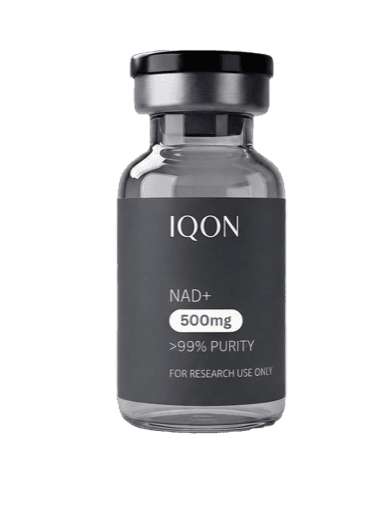
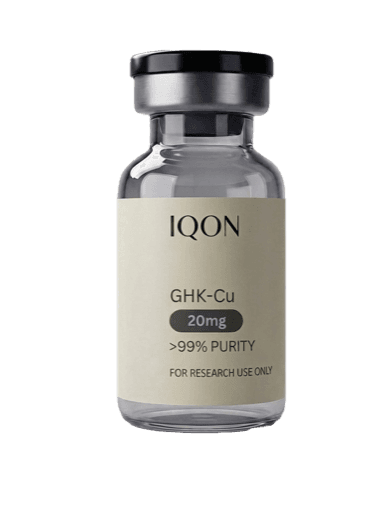
Applied automatically at checkout, no code needed
Claim my 20% off →In every pair, the lower priced item is 20% off after other discounts; accessories excluded. For research use only.
This article explains published research and is not treatment guidance. Laboratory research materials are not substitutes for approved medicines.
A closer look at an established trial
The distinction matters because a combined trial outcome can improve even when one of its components barely moves. Here, the result raises a question about survival in a vulnerable group, while leaving the effect on heart failure episodes unresolved.[1]
SURPASS CVOT compared two active medicines in a randomized, double blind phase 3 trial.[1] Tirzepatide acts on the GIP and GLP 1 receptors, which are involved in metabolic signaling.[1] Dulaglutide acts on GLP 1 and already had evidence of reducing cardiovascular events.[1] Both groups continued standard care.[1][2]
The original trial assigned 13,299 adults to treatment.[2] Its main analysis included 13,165 after excluding 134 who did not meet eligibility criteria.[2] The principal question was whether tirzepatide preserved dulaglutide's cardiovascular protection, using a combined outcome of cardiovascular death, heart attack or stroke.[2]
The December 2025 report met its statistical standard for noninferiority: tirzepatide was not worse than dulaglutide beyond the trial's specified margin.[2] It did not establish superiority on that main outcome.[2] The October paper examines the participants who entered with a heart failure history and compares their results with those without one.[1]
This is a new analysis of a completed trial.[1][3] The registry records study completion in June 2025 and the first posting of results in July 2026.[3]
What changed when deaths were included
The heart failure subgroup contained 1,310 people assigned to tirzepatide and 1,368 assigned to dulaglutide in the efficacy analysis.[1] All had type 2 diabetes and established atherosclerotic cardiovascular disease, meaning disease involving plaque in the arteries.[1] Over an average of approximately four years of trial follow up, the results depended on which events were counted together.[1]
Death from any cause, or hospitalization or urgent visits for heart failure: 239 of 1,310 tirzepatide participants (18.2%) had an event, compared with 294 of 1,368 dulaglutide participants (21.5%). The hazard ratio was 0.83, with a 95% confidence interval from 0.70 to 0.99.[1]
Cardiovascular death, or hospitalization or urgent visits for heart failure: 188 of 1,310 tirzepatide participants (14.4%) had an event, compared with 228 of 1,368 dulaglutide participants (16.7%). The hazard ratio was 0.85, with a 95% confidence interval from 0.70 to 1.03.[1]
Hospitalization or urgent visits for heart failure alone: 99 of 1,310 tirzepatide participants (7.6%) had an event, compared with 105 of 1,368 dulaglutide participants (7.7%). The hazard ratio was 0.97, with a 95% confidence interval from 0.73 to 1.27.[1]
These Table 3 counts represent participants with an event, not the total number of repeated events.[1]
The first comparison amounts to an observed difference of 3.3 percentage points, calculated from the published percentages.[1] Its hazard ratio corresponds to a 17% lower relative hazard during follow up.[1] Those are different ways of describing the same comparison; a relative hazard is not a percentage point difference.[1]
Deaths from any cause occurred in 177 of 1,310 tirzepatide participants and 229 of 1,368 dulaglutide participants, or 13.5% and 16.7%.[1] The hazard ratio was 0.80, with a 95% confidence interval from 0.65 to 0.97.[1] The authors identify mortality as the main driver of the favorable combined result.[1]
For cardiovascular death combined with heart failure visits, the confidence interval crossed 1, the value representing no difference in hazard.[1] The same was true for heart failure visits alone.[1] The evidence therefore remained compatible with no treatment difference for those outcomes; it did not establish that the treatments were equivalent.[1]
Why the survival signal needs another test
The analysis of participants with and without a heart failure history was planned, but the combined outcome incorporating death from any cause was added after the fact.[1] The prespecified heart failure composite used cardiovascular death instead.[1]
The paper also did not adjust these comparisons for the increased chance of a positive finding when many statistical tests are performed.[1] That makes the results useful for developing a hypothesis, with less certainty than a successful primary endpoint tested under the original trial plan.[1]
The comparison still has strengths. Treatment was randomly assigned, and an independent committee assessed clinical events without knowing which medicine a participant received.[1] Those features make this more informative than a comparison assembled from people who chose different treatments. They do not make every later analysis equally conclusive.
Which heart failure patients were represented?
Heart failure history came from reported medical history, including reports of previous hospitalization.[1] The study did not collect the cardiac imaging and heart failure biomarkers needed to sort participants reliably into reduced or preserved ejection fraction groups.[1] Ejection fraction describes the proportion of blood the left ventricle ejects with each beat.[5]
The analysis therefore cannot tell whether participants with reduced or preserved ejection fraction drove the result.[1] The eligibility rules also excluded people hospitalized for congestive heart failure in the preceding two months and those with chronic class IV heart failure.[1][3]
The results apply to the enrolled population with diabetes and established cardiovascular disease. They cannot be assumed to describe everyone with heart failure.[2][3]
Benefits and tolerability belong in the same picture
Gastrointestinal adverse events were more frequent with tirzepatide than with dulaglutide, both in the original trial report and in the new analysis of participants with and without heart failure.[1][2] A favorable cardiovascular result does not remove that treatment burden.
The safety analysis included randomized participants who received study treatment, a different population from the efficacy analysis.[1] The statistical plan followed adverse events from the first dose to each participant's end of follow up, including events after treatment discontinuation.[1][4] These observations should not be read as a uniform four year safety exposure for every participant.
Eli Lilly funded the trial and supported it from design through data analysis and report writing.[1] Several authors were company employees and shareholders.[1]
The next useful study would enroll and characterize people with heart failure specifically, then prospectively test survival and heart failure events. SURPASS CVOT gives that work a concrete question: whether the mortality signal persists when it is the planned question, and whether any benefit extends to the hospital visits that remained similar here.[1]
Sources and further reading
- Nicholls et al. SURPASS CVOT heart failure analysis, European Journal of Preventive Cardiology, October 15, 2026. DOI: 10.1093/eurjpc/zwag452
- Nicholls et al. Cardiovascular Outcomes with Tirzepatide versus Dulaglutide in Type 2 Diabetes, NEJM, December 18, 2025. DOI: 10.1056/NEJMoa2505928
- ClinicalTrials.gov: SURPASS CVOT NCT04255433, protocol and posted results
- SURPASS CVOT statistical analysis plan, version 4, July 24, 2025
- American Heart Association: Ejection Fraction Heart Failure Measurement
Related reading
Buy 1, Get 1 20% Off
Pick any two research compounds. Take 20% off the lower priced one.
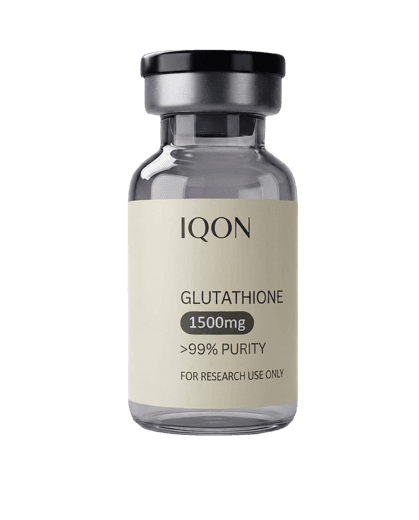

Applied automatically at checkout, no code needed
Claim my 20% off →In every pair, the lower priced item is 20% off after other discounts; accessories excluded. For research use only.