
FDA plans to consult its Pharmacy Compounding Advisory Committee about five peptide substances before the end of February 2027. Its early announcement names the compounds but leaves the meeting time and location to be scheduled.[8] The committee would advise FDA about its compounding list; a recommendation would not approve a medicine.[9]
Buy 1, Get 1 Free
Pick any research compound. The second one is on us.
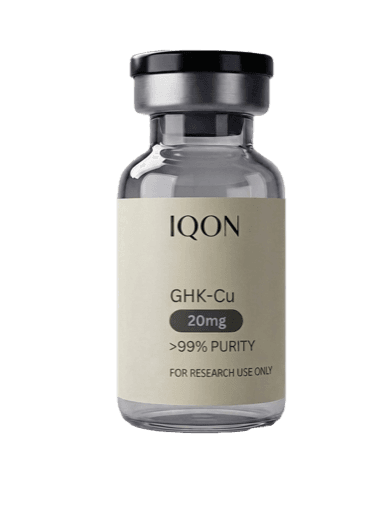
Applied automatically at checkout, no code needed
Claim my free vial →Lower priced item free; accessories excluded. For research use only.
Correction, October 2, 2026: An earlier version treated a planned review window as a scheduled meeting, misstated the HHS secretary's chronology, and included unsupported scientific claims and a law-firm attribution. It also confused Category 1 with approval and gave an unsupported rulemaking timetable. This rewritten explainer corrects those errors using FDA records.
This article explains FDA's advisory and compounding processes. It is not a determination that a product may be used clinically. Research-grade peptides are for laboratory use only.
Which peptides are in the second review?
FDA names Cathelicidin (LL-37), GHK-Cu, Dihexa acetate, Melanotan II and pegylated mechano growth factor (PEG-MGF). These are the five substances in its early meeting announcement. The February 2027 wording is a target window for consultation, not an announced meeting day.[8]
The distinction from July is concrete. Federal Register document 2026-07361, published April 16, set July 23 and 24, 2026 for a separate meeting and established docket FDA-2025-N-6895. That document concerns the July agenda, not the later five-substance session.[9] Our July PCAC article covers that earlier review.
What the 503A list actually does
A bulk drug substance is an ingredient used to make a compounded drug. Section 503A sets conditions under which qualifying compounded products can be exempt from certain federal requirements, including the normal drug approval requirement. That framework is different from FDA reviewing and approving a finished medicine.[9]
FDA's formal 503A bulks list is one route for an ingredient to meet the section's requirements when no applicable pharmacopeial monograph exists and it is not a component of an approved drug. The agency develops the list through rulemaking, with consultation and public input.[6]
The numbered interim categories have another purpose. Category 1 contains nominated substances under evaluation that may qualify for FDA's conditional enforcement policy. Category 2 identifies significant safety concerns. Moving out of one category does not by itself mean entry onto the final list.[6]
Why GHK-Cu's category history needs the dates
GHK-Cu illustrates how a nomination change can be mistaken for a scientific decision. FDA's May 14 list says the non-injectable entry was removed from Category 1 on April 22 because nominations had been withdrawn. On May 5, a nominator clarified that it intended to withdraw only the injectable nomination. FDA restored GHK-Cu for routes other than injection to Category 1.[5]
The scope is therefore broader than a shorthand reference to topical GHK-Cu, but it expressly excludes injection. Restoration records a change in the nomination; it does not show that FDA approved GHK-Cu as a medicine. Category 1 remains subject to the interim policy's conditions.[5][6]
The early PCAC announcement lists GHK-Cu without restricting that agenda entry to injection. Readers should use the eventual meeting notice and briefing materials to establish the precise questions FDA puts to the panel.[8] Our GHK-Cu research explainer examines the clinical evidence separately.
The safety questions remain part of the review
FDA continues to publish safety concerns for substances whose nominations were withdrawn. For injectable GHK-Cu, it flags limited human data and possible immune reactions linked to peptide clumping or impurities. LL-37 also carries concerns about immune reactions and insufficient safety information.[7]
For Dihexa acetate and PEG-MGF, FDA says it has not identified human exposure data. Its Melanotan II entry cites published reports of serious adverse events, including melanoma and priapism, a prolonged erection. A case report records an event; it does not by itself establish its cause or frequency.[7]
These are substance-specific questions, not a ranking of which compound is most likely to receive a favorable vote. A familiar biological name or a change to a nomination cannot answer whether a proposed drug preparation has acceptable risks.
How advice becomes an FDA decision
The committee supplies nonbinding scientific advice. FDA retains the decision, and its description of list development calls for notice-and-comment rulemaking: the agency publishes a proposal, receives comments and issues a final regulation.[6][8]
A meeting target is not a deadline for a final rule. Nor does a favorable committee recommendation guarantee the eventual wording or outcome. Readers following the process should distinguish the recommendation from a proposed rule and from the final regulation that would change the formal list.[6]
The April notice shows why the details matter. It identifies uses evaluated for individual substances and sets a particular meeting docket and participation deadlines. A headline saying that a peptide is under review leaves out the question the panel is being asked to consider.[9]
The documents that will show what happens next
The next concrete milestone is the later meeting's own Federal Register notice. FDA's early announcement says a notice and public-comment docket are forthcoming. The notice should supply the arrangements and participation deadlines for that session.[8]
Briefing materials will then show the evidence and questions put before the panel. After the meeting, FDA's subsequent regulatory documents will determine what changes. Until those documents exist, the February 2027 target describes a planned consultation, not an approval date.
Frequently asked questions
What does Category 3 mean?
Category 3 covers substances nominated without enough supporting information for FDA to evaluate them. It is distinct from Category 2, which concerns significant safety risks, and does not qualify for the Category 1 interim policy.
Does the July docket also cover the later meeting?
The April Federal Register notice establishes FDA-2025-N-6895 for the July meeting. FDA's early announcement for the later session says it intends to establish a public-comment docket through a forthcoming notice.
Would inclusion on the bulks list make a compounded drug FDA-approved?
No. The list concerns one condition for compounding under section 503A. That section can exempt qualifying compounded products from the usual drug approval requirement; inclusion is not approval of a finished medicine.
Sources and further reading
- FDA. Bulk drug substances nominated under section 503A. Updated May 14, 2026.
- FDA. Bulk drug substances used in compounding under section 503A.
- FDA. Safety risks associated with certain bulk drug substances.
- FDA. Early announcement of a Pharmacy Compounding Advisory Committee meeting.
- Federal Register (April 16, 2026). Notice for the July PCAC meeting. Document 2026-07361.
Related reading
Buy 1, Get 1 Free
Pick any research compound. The second one is on us.
Applied automatically at checkout, no code needed
Claim my free vial →Lower priced item free; accessories excluded. For research use only.