
State-licensed pharmacies, federal facilities and licensed physicians can compound drug products using six named peptide bulk drug substances without HHS enforcement action, under a policy the department filed for public inspection on October 28, 2026. It is the narrowest kind of permission: it applies only when ten listed conditions are met, it adds nothing to the FDA list that governs lawful compounding, and it says on its face that it creates no rights and binds no one. The peptides sold online as research-use-only chemicals, which is the channel most buyers actually use, sit outside it.
Buy 1, Get 1 20% Off
Pick any two research compounds. Take 20% off the lower priced one.
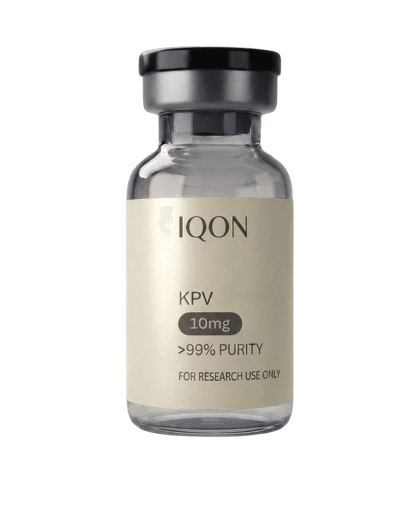
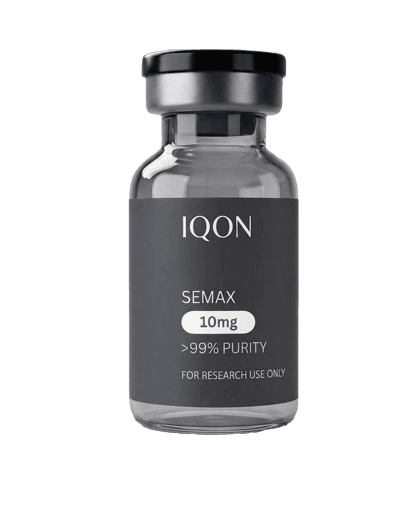
Applied automatically at checkout, no code needed
Claim my 20% off →In every pair, the lower priced item is 20% off after other discounts; accessories excluded. For research use only.
IQON Labs offers a separate research use only catalog. The policy described here governs licensed pharmacies and physicians compounding for a patient-specific prescription, not research materials.
What HHS published
The document is titled "Enforcement Discretion Policy Regarding 503A Compounding Using Certain Peptide Bulk Drug Substances". HHS filed it for public inspection at 11:15 a.m. Eastern on October 28, 2026, and the Federal Register lists it for publication on October 30, 2026 as document 2026-22192, docket HHS-OASH-2026-0496, under regulatory review number RIN 0910-ZD94. It is three pages, is signed by Secretary Robert F. Kennedy, Jr., and takes comments for two weeks after publication through regulations.gov.
What it says, in its own words: "HHS does not intend to take enforcement action against a State-licensed pharmacy, Federal facility, or licensed physician compounding a drug product using a peptide bulk drug substance found in Appendix A."
That sentence matters because of what section 503A requires. A compounder may use a bulk drug substance only if it complies with an applicable United States Pharmacopeia or National Formulary monograph, is a component of an FDA-approved drug, or appears on the 503A bulks list. None of the six substances in the policy's Appendix A meets those tests today, which is why HHS is limiting enforcement rather than pointing to an existing authority.
What the policy actually permits
The scope is the sentence above, and the limits are the ten conditions that follow it. Anyone affected by this policy has to read them together, because HHS conditions its non-enforcement position on all of them.
The bulk drug substance must appear in Appendix A.
It must also match the identity and the permitted route of administration in Appendix B. Identity is defined to include amino acid sequence, chemical structure, molecular weight and molecular formula, so an acetate salt and a free base are not interchangeable under the policy.
The substance must come from a facility registered under section 510 and be characterized in a valid certificate of analysis whose results match FDA guidance-based criteria for identity, purity, potency and contaminants such as endotoxins, heavy metals and microbial contamination.
The original manufacturer, not a later packer, repacker, labeler or distributor, must be registered under section 510, comply with current good manufacturing practice requirements and have its physical facility location listed on the certificate of analysis. A repacker or reseller must document its own validation of the manufacturer and of the manufacturer's certificate.
Compounders must report serious adverse events, whether or not they are considered drug related, and product quality problems to FDA's MedWatch program and to the states where product is compounded and shipped. The report includes the active ingredient and strength, the original manufacturer and its facility identifier, the dosage form and the route of administration.
The drug product must carry the statement: "This is a compounded drug product. Not for resale."
Each compounded product may contain only one active pharmaceutical ingredient from Appendix A. HHS explains the reason: attributing an adverse event to a specific substance is easier when a product has one, which matters for safety surveillance. A pharmacy combining two of the listed peptides in one vial falls outside the policy, as does a product that adds a non-peptide ingredient to one of them.
A compounded peptide in an oral dosage form requires documentation that the specific formulation reaches adequate oral bioavailability in humans.
The only delivery device that may be co-packaged with the product or contain it is an FDA 510(k)-cleared syringe.
All other requirements of the Food, Drug, and Cosmetic Act still apply, including the prohibition on compounding under insanitary conditions and the section 503A requirement of a valid patient-specific prescription.
That last item is the one readers outside pharmacy will care about most. The policy does not create a route to buy a finished peptide product off a shelf. It describes what a licensed pharmacy or physician may do for an individual patient.
Which peptides, and in which form
Appendix A lists six peptide bulk drug substances. Four of them, with the routes the policy allows, are:
KPV, topical and oral
MOTS-c, subcutaneous and intramuscular
Semax, intranasal
Epitalon, subcutaneous and intramuscular, in intermittent courses
The routes are not incidental. Semax is covered intranasally, not by injection, and KPV is covered topically and orally rather than by injection. Appendix B of the policy sets out each substance's structure with a justification for including it, and readers who need the complete list of six can open the HHS document directly, which is linked in the sources below.
Peptides outside Appendix A are not covered, including substances that have been nominated for the 503A bulks list but not named in the policy. HHS also notes that its own Center for Drug Evaluation and Research had recommended against listing the peptides the Pharmacy Compounding Advisory Committee voted to include in July 2026.
What the policy does not do
Enforcement discretion is not a listing and not an approval.
The six substances have not been added to the 503A bulks list, which is developed through rulemaking. The Federal Register notice states that the interim policy "does not establish any rights for any person and is not binding on HHS or the public". HHS reserves the ability to revisit the policy in whole or in part if a safety signal or product quality issue arises with a compounded product in scope.
Three further limits matter for anyone planning around it. The policy addresses section 503A compounders, so it does not extend to section 503B outsourcing facilities, which produce higher volumes. It does not displace state pharmacy board requirements, so a state can still treat a given compounded preparation as impermissible. And it does not authorize importation of peptide bulk substances, or excuse manufacturers and distributors from registration, import admissibility, drug supply chain or state licensing obligations.
HHS also restates the baseline that compounding does not change: compounded drugs are not FDA-approved, which means FDA does not review their safety, effectiveness or quality before they are marketed.
Why HHS acted, and why FDA staff objected
HHS gives a market reason for the policy. It states that limited enforcement discretion "will discourage the continued, widespread use of certain research-use-only peptides supplied by foreign manufacturers that pose a safety risk to US patients", and that allowing limited compounding under safeguards provides patients with "a more controlled alternative". The department says the policy advances "patient choice and freedom while appropriately protecting patient safety", and that public comments may supply evidence FDA can weigh in later rulemaking.
Reporting on the same day describes internal resistance to how that was done. The Associated Press, in a report carried by PBS NewsHour, described the document as a step back from HHS's original plan: officials initially wanted FDA to draft a regulation that would add the substances to the compounds list, and FDA officials warned that the agency's scientific staff had major safety concerns and would not support a regulation deeming them safe. The same report, attributed to six people familiar with the policy's development, said most FDA scientific staff opposed the approach and had limited input in drafting it. NPR reported that at the July advisory committee meeting the FDA's own scientists recommended against unwinding the existing restrictions. The six substances covered by the policy were in Category 2, the FDA list of compounds that should not be compounded, from September 2023 until April 22, 2026, and HHS states that neither the placement nor the removal changed their status under section 503A.
Stakeholder reaction split along the same lines as the committee votes. The Alliance for Pharmacy Compounding welcomed the policy, and the American Academy of Peptide Medicine described it as a step toward eliminating gray and black markets. The Partnership for Safe Medicines said it leaves patients in a gray area about safety, and the drug industry group PhRMA objected to HHS directing FDA not to enforce, according to reporting on the policy from BioSpace on October 29.
What changes for research-use-only sellers
Nothing in the policy reaches a vial sold as a research chemical.
The policy governs compounding by licensed pharmacies and physicians for a patient-specific prescription. A seller who ships a research-use-only vial to a buyer without a prescription is not a section 503A compounder acting on a prescription, so the enforcement discretion announced on October 28 does not apply to that transaction. FDA's separate enforcement campaign against those sellers has continued this year: on August 24, 2026, the agency sent warning letters to five online sellers, citing dosing information, injection instructions and dose calculators on their websites as evidence the products were intended for human use, and stating that bacteriostatic water offered to prepare an injection was itself an unapproved drug. Those letters allege unapproved new drugs and misbranding under the Food, Drug, and Cosmetic Act.
HHS's stated theory is that legal compounding will pull demand away from that market. Capacity is the open question. NPR reported that one compounding company's chief executive said only its smaller facility would be able to make the peptides and only in small quantities, and that the country's section 503A pharmacies would not be able to meet demand. Law-firm analysis of the policy reaches a similar conclusion from the supply side: manufacturers able to document section 510 registration, CGMP compliance and the policy's analytical testing may find new business, but suppliers built around the research-use-only market are unlikely to meet requirements that would force changes to sourcing, quality systems and documentation.
What happens next
Comments can be filed in docket HHS-OASH-2026-0496 on regulations.gov for two weeks after the notice appears in the Federal Register on October 30, 2026. FDA's rulemaking on the 503A bulks list continues underneath the policy, and Frier Levitt, a firm that advises compounding pharmacies, estimates that process at 12 to 24 months.
Three things are worth watching rather than assuming. Whether any peptide on the list is actually compounded will depend on whether a certified bulk supply exists and whether the relevant state permits the preparation. Whether enforcement discretion survives contact with a safety signal is explicitly left open. And the research-use-only market, which the policy is meant to shrink, still has no federal pathway of its own; its sellers remain subject to the warning-letter process that produced five letters in August.
The practical test for the policy is not what HHS announced. It is whether a supply chain meeting every one of the ten conditions exists in the quantities patients and pharmacies need.
Frequently asked questions
Does this make compounded peptides FDA-approved or add them to the 503A bulks list?
No. The policy is a statement that HHS does not intend to take enforcement action while the bulks list is developed through rulemaking. It does not amend section 503A, does not confer approval and is expressly not binding.
Can a buyer order one of these peptides without a prescription now?
Not under this policy. The scope is a licensed pharmacy, federal facility or licensed physician compounding using a listed bulk substance, and section 503A's patient-specific prescription requirement is one of the conditions the policy restates. Research-use-only sales are not in scope.
Which substances does the policy cover?
Appendix A lists six peptide bulk drug substances, and Appendix B fixes each one's identity and permitted route of administration. The complete list is in the HHS document linked in the sources.
Sources and further reading
- Federal Register: Enforcement Discretion Policy Regarding 503A Compounding Using Certain Peptide Bulk Drug Substances (filed for public inspection October 28, 2026; publication date October 30, 2026; FR Doc. 2026-22192)
- HHS: Enforcement Discretion Policy Regarding 503A Compounding Using Certain Peptide Bulk Drug Substances, with Appendix A and Appendix B
- Frier Levitt client alert: HHS announces landmark peptide enforcement discretion policy (October 28, 2026)
- Associated Press report carried by PBS NewsHour: FDA scientists opposed the Trump administration's move to ease peptides access (October 28, 2026)
- NPR: Small compounding pharmacies won't be penalized for making peptides (October 28, 2026)
- BioSpace: HHS clears compounding pharmacies to manufacture 6 unapproved peptides (October 29, 2026)
- FDA warning letter to Peak Performance Peptides, MARCS-CMS 735127 (August 24, 2026)
- McDermott Will & Emery client alert: Federal regulators and state boards crack down on RUO peptides (September 24, 2026)
Related reading
Buy 1, Get 1 20% Off
Pick any two research compounds. Take 20% off the lower priced one.
Applied automatically at checkout, no code needed
Claim my 20% off →In every pair, the lower priced item is 20% off after other discounts; accessories excluded. For research use only.